Translate

Showing posts with label Opinion. Show all posts

02 November, 2015

19th Annual War On Christmas

Commentary copyright by Joshua Michail, 2015
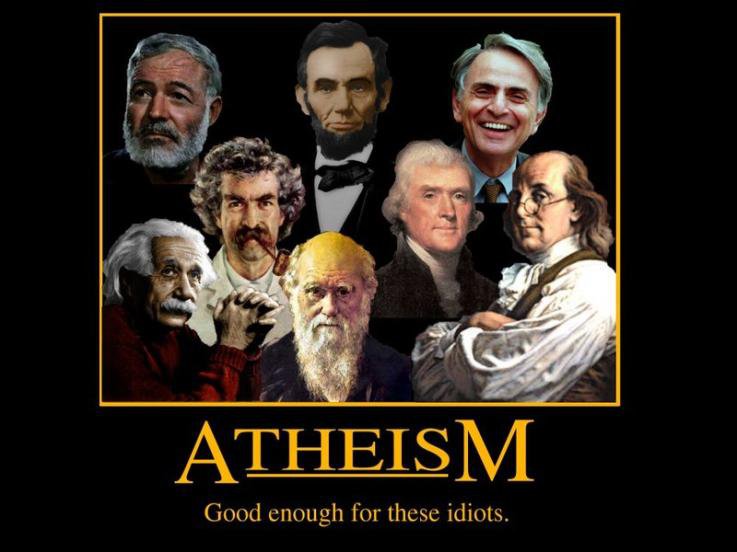
It was only the day after Halloween that I saw this meme pop-up on Facebook. I decided to add some fun loving thought-provoking rebuttal to the absurdity of the contrived "War On Christmas". Apparently, Thanksgiving and New Year's Eve are not holidays for Christians and that must be why they take so much offense when people say "Happy Holidays".

Please feel free to share this post.


Follow, Like, Subscribe:
On Facebook  --  On Twitter  --  On YouTube  --  On GoodReads  --  On Amazon's Author Central

My book "To Make a Better World" would make a great gift and is available in paperback & eBook, here:
amazon.com/dp/1512115894

02 June, 2015

On the Beauty of Sex.

Image source unknown.
Why do we have such a problem with “slut” shaming? Why are women expected to wait for someone to approach them about sex? Why do all too many women expect a knight in shining armor to rescue them from the ivory tower? Why do we feel guilty for our sexual urges? There are many various attitudes toward the subject of sex. Unfortunately, the more common ones are detrimental to individual health and happiness. Of those, many are even a handicap to society, and more importantly to the individual. As I had written in my previous essay on this subject – Sex; Attitude and Greatness, back in 2012, a very large part of sex boils down to attitudes. The reality is that sex is mostly mental, and only partly physical. Of course, that's not to ignore, exactly, the physical part of it, without which sex wouldn't be possible. But, even touching, kissing, etcetera are stimulation of nerve endings, which send signals up the nervous system to the brain, where the action is interpreted and understood. In that way, even the physical is largely mental. My point here, however, is about how we think of sex. We all have some expectations, some preferences and desires, we even have beliefs outside of sex that influence how we think of sex. More importantly, these attitudes and beliefs all affect our enjoyment of sex.


Some people might disagree with me about what I'm about to say, mostly the religious, I'm sure. If there's anything that is universally true about sex it's this – sex is natural and one of the most beautiful experiences of life. In fact, we could say life is ultimately all about sex, after all, most organisms struggle to survive long enough to reproduce. It's almost as if that is it the point of life. Worse still, for most organisms this struggle is paramount and not enjoyed, rather it's only the fulfillment of an undeniable instinct. Sex is ultimately an endless fight for survival. It is a fight, first for the organism, to obtain a mating partner. This often leads to fights between two or more competing animals, like rams locking horns to determine a winner. Those rams are not just trying to win the battle, they're trying to win the mating partner. This is part of the process of evolution. Nearly everyone has heard of – and most people understand – natural selection, the process in which as creatures evolve the traits that don't hinder an animal's survival can be passed on to the next generation if it reproduces. But, the male peacock's elaborate and beautiful tail patterns, just like the ram's horns and ability to win the fight with other rams, is sexual selection. In the process of sexual selection the evolution is driven by development of traits that make an animal more attractive to potential mating partners. The male peacock's tail feather patterns serve no function to help it survive, but they do help it obtain female peacocks to have sex with, and thus produce young peacocks with his genetics. The ram's horns are not particularly useful for his daily survival either, he doesn't use them to get food, and most likely doesn't use those horns to defend against predators. The ram's horns more-or-less only help it to win the fight for dominance for the sole purpose of mating. Just a little aside – sexual selection and natural selection are not mutually exclusive forces in the process of evolution. I thought I'd add that point in case anyone did not already know, we all know there are too many misconceptions out there.

Images of ancient fertility goddesses, sources unknown.

But don't think that evolution, or nature, is sexist because females often also develop traits that help them obtain mates. Nature often favors in the females greater ability to produce offspring or to provide for them. So, while it may not seem as obvious when we look at the various species, sexual selection does happen in females too. If a female can produce numerous offspring the species is more likely to survive. If the female can be more attached to her young, the species has a better chance at being continued because the young have a better chance at achieving sexual maturity thanks to mother's help is surviving to adulthood. This means that female forms often have been selected by males for what seems to be a greater ability to raise young to maturity or produce more young. In human females, for example, broader hips are instinctively perceived as a desirable trait. People have even demonstrated an intuition regarding a woman's hip and sexual selection when they say: “That woman has child-bearing hips!” Likewise, the breasts of human women has evolved do to sexual selective pressures, since the roundness of the buttocks has become less obvious and constantly displayed when we began walking upright, the breasts began becoming bigger and rounder and more noticeable. While the butt is visible from behind, it's not visible from the front – where it happens that the breasts are to be found. When males have a choice in mates, a female with the traits that seem most desirable is most likely to get a mate. While sexual selection is usually geared toward greater strength and ability to survive in males, in females it's usually geared toward greater ability to reproduce and care for the young. Either way, all species select for the best chances that the species will long endure.


The process of evolution has long been at work in humans, as well. And sexual selection has also been a very potent influence on humanity, even to this day. One example is the average size of the human penis. Over a very long time, millions of years in the transitional species from which humans evolved, and in humans for around one hundred fifty thousand years, females have chosen to mate with males who had more desirable penises. So, straight ladies, whatever your thought about human penises you can thank, or blame, your ancient women ancestors. But, males have also influenced the evolution of the female human body. Broader hips have long psychologically suggested a greater ability to birth children. Broad hips have long been seen by many ancient men as a sign of fertility. It's true that breasts on women evolved in part because the round rump, which is seen in many mammalian species as a sort of sexual lure for males, are not as clearly visible when the female is seen from the front because we walk upright, but there's another possible not-mutually-exclusive reason. Larger breasts have long been seen by our ancient male ancestors as a sign of a woman's greater ability to nourish children. And, obviously, well-nourished children have a greater chance of growing up to be healthy adults who can pass the family genes on to another generation. Men have preferred these features over such a long time that the average woman's body is shaped as it is now. Psychology is a science that can help us better understand sex, and not just in understanding how humans have evolved due to sexual selection.


In all these things about us humans, psychology explores us and explains us. A few things follow here as an example. Women have long found a man's wealth to be key factor in determining his attractiveness, though most claim otherwise. It does make sense that historically there's been an evolutionary reason for this. A partner who can provide for the children will, naturally, mean children who will grow up healthier and be able to continue the species. However, things have changed. Women in many societies around the globe now work. And many of them are able to provide for their children without relying on a man's wallet. The man's wealth is becoming less valid as a factor for attraction. Likewise, starting with the harvesting of milk from cows and sheep and continuing with the invention of baby formula, a woman's breast size has been less valid as a factor for determining a woman's attractiveness. The fact is that we carry many legacies of our evolution in our current attitudes about sex. Much of these attitudes are have outlived their usefulness to the species. Of these outdated attitudes, some are harmless, but some are really quite detrimental.


Puritanical views have long perverted and permeated American views on sex, and to a lesser degree much of western views, as well. Pervasive in western culture is the Christian view that sex is not beautiful, but rather “sinful” and “dirty” – and much of this is true of Islam, as well. The idea that sex is some kind of disgusting thing that should only be done in the context of marriage is traditional among the most conservative of people. Why should this be? Because, the archaic view expressed by the early fathers of Christianity is that sex only exists to cause there to be more Christian souls to go out and dominate the globe. This is also true of most religions. Today religions continue to dominate our culture with their self-serving beliefs about controlling people, with unnecessary shame and guilt and fear. Now, one might think that promoting promiscuous sex would have been more effective at enlarging the ranks of the religious, but they had a reason against that. They wanted to make sure that the children were ensured to be members of the particular religion. If the children were born to unwed parents the children could be taken to any church or any religion. It served the religion's need to control its members and and to grow the religion's numbers, but there was another reason for sex being limited to marriage only. It actually mattered in terms of inheritance and family lines. Such restrictions were meant to ensure that a man's property would be inherited by his actual child rather than some other man's child. With a marriage, there was a recognized social contract between the man and woman involved, and it meant that there was a legal setting for the estate distribution. Again, today these things are less relevant. With the invention of DNA testing we can now conclusively prove a child's parents, further a person can choose to leave his or her estate to anyone or any group named in a legally-binding document called a will. The religious reasoning is something that can't be justified in the modern era.


Image source unknown.
Monogamy is not natural, exactly. It's true that for the survival of our species, since children require around 15 years to reach maturity pair-bonding of the parents served this interest. We evolved to form family units in which the father and mother cooperated to provide for and protect the young. I say fifteen years, but that's arguable, give or take a few years. The point is that it takes many years before a young human would be able to survive without parents taking care of him or her. Still, we evolved societies into which we live for all our lives, and which continue the benefits we gained as a child from having parents and family working together. But, at odds with this pair-bonding trait we evolved is another evolutionary trait found in both men and women. This is a trait that is so powerful that it's the underlying force making marital infidelity actually a fairly common occurrence. In males, of most species, the ability to spread the genetic code to create as many offspring as possible has been a great force in ensuring the survival of a species. Ours is no exception to that fact. In females, particularly in humans, there evolved a tendency to find a mate to bond with who can provide well, but to seek to reproduce with other males who have more desirable physical traits. A woman is predisposed biologically, by evolution, to settle down with the man who has wealth, but to have affairs with men who seem to be more fit and healthy. In either case, our species evolutionary legacy is conflicted and neither trait is ethically better or worse than the other. These just are the facts about our evolution and our nature. So, this leads to a problem. How do we reconcile our enlightenment and our nature to best suit ourselves? As long as we deny our nature we will find ourselves less happy and healthy than we can and ought to be.


The fact that there are women who want to silently suffer a mediocre experience is saddening and ultimately self-destructive. The idea of putting up with not getting the most out of sex because of not wanting to disappoint will backfire. It's true that many younger people, with their tremendous amounts of inexperience, are more prone to not communicate properly, but they need to be encouraged to communicate. Fundamentally, by trying to please one's partner by not offering instruction and not communicating, one is building resentment and frustration in oneself and one's partner. Also, when one discovers one's partner has not been fully engaged it most certainly is a serious disappointment and ruins the experience. By doing this, some women are causing two people to become resentful of the woman in question, herself and her partner. The notion of quietly accepting poor performance needs to be put to an end. Though it may be true of some men, it is almost exclusively, in this issue, women causing their own problem. I believe this condition is largely due to archaic notions that still afflict us. Even today, popular culture suggests women are supposed to be submissive and to use sex as a tool instead of enjoying it for their own pleasure. So many socializing forces, such as many women's magazines and romance movies and fairy-tales still perpetuate the destructive narrative and bad advice.


If women try experimenting with themselves, and then have completely honest and straightforward talks with their partners about what works for them, then sex would likely be far more enjoyable for most. It seems that many women have some kind of hang-up about both masturbating and about communicating with their partners. That's not to say that there aren't guys who don't listen, of course there are, but there's also no reason for a woman to assume that sex can't be great, or better. Most guys really do want to satisfy their partners, and no one is a mind-reader. In fact, no one, of either gender, is a mind-reader. No one can know things that are not told to them. And, it is unreasonable and inexcusable to continue to behave as if it's fair to expect people to be more than who and what they are. It's unjust to think that one's partner should live up to and perform like the fantasies that have been implanted by corporate interests like Hollywood and molded by corrupt influences like the Puritan church of hundreds of years ago. I believe it is high-time we as a species move into the modern era – we need to evolve out of the stagnate cesspit of the out-dated misconceptions. This is only going to happen as we continue to challenge the standard, and help to enlighten others.


Image Copyright 2015 by Joshua Michail.
Sex is the most beautiful thing people can do with each other, intimately. Sex, however, is not love. Love and sex can and do often go together, but one ought not to confuse these two separate things. Many people believe that sex with someone they love is beautiful, and they're not wrong, but sex is beautiful even without love. In a way, sex gets a bad rap on that regard, because many people ignore the fact that love is separate from sex. But, I blame religion for that, and many more mental handicaps. Religion must be expelled from the bed sheets. The single greatest toxin to humanity and to sex is religion. The fact that people feel guilt for doing and enjoying a natural and beautiful thing is something that religion alone has foisted upon us. If we are half as wise as we like to think our species to be, we must change our ways. We can no longer afford to pretend that we are not what we are. Our concepts of marriage romantic relationships must change, we ought to embrace our nature. We can, of course continue to marry the ones we love, but we should expect and embrace the fact that sex is not and never has been and never will be confined to marriage. We must accept that we could forge a new model, the family remains, but why not have multiple wives for each man and multiple husbands for each woman? Why not accept polyamory? After all, not only do we naturally desire more than one partner for the rest of our lives, in regards to sex, but we are perfectly capable of loving more than one partner at the same time. We must also embrace the rights of women to be equal to men, including in their sex lives. Why should we look upon a woman who enjoys sex as someone to be shamed? It's a shame on us if we continue this “slut shaming”. We must not interfere with women as they pursue their sexual satisfaction as they see fit, and embrace the happiness this brings not only those women, but also ourselves as a society. We must shed the severe hindrances that make life less happy. 


Copyright © 2015, by Joshua Michail
 All Rights Reserved.
Follow and retweet on Twitter.                          Like and share on Facebook.

29 March, 2015

To Make A Better World - Excerpt #5

I hope that you will enjoy this and the other excerpts from my book -- To Make A Better World, and share this link with your friends. Leave your opinions in the comments, and if you like please share, thanks.

Copyright, 2015, Joshua Michail, all rights reserved.
Image is copyright, 2015 by Joshua Michail.
FROM: To Make A Better World; The handbook for good secular living in the modern era.
By Joshua Michail

Excerpt #5, from the chapter: "Happiness and Stillness".


(NOTE: ellipses indicate skipped content. This chapter is broken up into several sections.)

2.2 - Love.

It should be well known that there are a few types of love. But, there is also lust, which many people confuse for love. This is the physical desire of another person. At the most basic level love is really a chemical reaction, a process of neurotransmitters firing. But then, that is true of other emotions as well. Romantic love is the most over-rated but also the most enjoyed and enjoyable kind of love. Familial love is the most useful and the most long lasting kind. Familial being the kind of love brothers and sisters feel for each other, or parents and their children feel for each other. It's the love that one experiences in one's family. Familial love is much like the love of friendship, though perhaps stronger. Friendly love is also quite useful, though can for some people in some cases be confused with romantic love, or even lust. The fundamental thing about love is that it is in whatever form, a bonding with another. This emotion, love, is natural and we evolved the trait for the purpose of perpetuating our social nature. Love is a beautiful thing, in and of itself. Though, like all other emotions, it can be exploited by those who are manipulative, destructive, and selfish.
…
The purpose of love is bonding. Fundamentally, familial love and romantic love are evolved traits in our species. The love we feel often can be quite potent. The love one feels for family is usually strong, and for most as a parent the love for one's child is nearly unbreakable. The bonding of family and friends together has allowed us to survive. As a social species, if we did not feel a strong emotional motivation to help others we would be more vulnerable. This sort of love has allowed so many people to survive at least long enough to breed, and so perpetuate the species. Romantic love is a force to bond people together. Historically, it drives two people together, and to remain together, which improves the chances of survival for their children. In the case of familial love, families and friends are bonded to support each other, which also helps in each individual's survival.
The danger of not applying rational thought to one's emotions cannot be understated. While most often fallacies of appeal to emotion manipulate a person by exploiting one's fear, it's also possible to exploit love. When one begins to feel romantic love for another, that person may find it easier to do things he or she would otherwise, normally, refuse. Some people willingly exploit that to their own unfair advantage. One should always be as vigilant as possible about scrutinizing one's emotions. Some other times a person can become obsessive and behave unacceptably. Some might stalk their victim, whom they believe they love, and someone who might otherwise be a normal honorable person might become a danger and lose his or her honor in the process. In some cases one might be blinded to the abuse of one's love by the person whom he or she desires, and thus suffer at the hands of that person. For most people, though, the main issue lies in trying to determine whether the person he or she desires is actually a good choice to commit to being with. In all of these cases there is a distinct advantage to thinking critically about how one feels and whom one desires. It's quite good advice to take one's self out of the emotional fog long enough to evaluate the case and to make a rational decision.

2.3 - Charisma.

Many people feel that they can't seem to make friends. Or may have difficulties in appealing to people they find attractive. I can't give an all-encompassing, detailed step-by-step instruction guide. And, really there isn't such a thing. But, there are some basic principles that can be very helpful. Charisma is the charm or non-physical attractiveness, a certain appeal. The usefulness of improving one's charisma in helping one attain happiness is that it can help one to make and keep friends, and to be liked by people in general. Having friends, and being liked in a basic sense, has a psychological effect on us. And that effect is conducive toward our general happiness.
There are many times in our lives when we need others to help us. Sometimes we need someone to do something, and we must approach the person about that. The point here is how ought you do that? There are any number of ways someone will communicate their will, needs or request. But, it is important to understand that how one communicates is as vital as what one communicates. As with anything else, it helps you to understand what others are thinking, or feeling, and how they think, what their views are generally. In any event, one can say the old adage “you can catch more flies with honey than with vinegar” is true. Even if you have authority to back up a demand, you're almost always better off asking nicely, or respectfully instructing. Essentially, people are more likely to help, or less resistant to helping, when you are a generally likable person.
So how does one improve one's charisma? Well, first one must understand that physical attractiveness does have an impact on one's charisma. But, luckily, it's not the only thing. Being attractive will naturally give one an advantage, however, sometimes some people rely too much on their beauty and not enough of their social and personal skills. When that is the case, even the most beautiful can be disliked, even intensely. With charisma someone who is typically considered by many to be not very attractive can be more likable than even a typically very attractive person. There are several areas one can work on to make one's self more charismatic. Attitudes, helpfulness, confidence, intelligence, humor, integrity and honor, as well as having good manners, can all be projects to work on and thus improve one's charisma. There are also many people with a natural charisma, but even they can find usefulness in working on those areas of personality.
…
Manners are undeniably important to controlling whether people think poorly or highly of you. Don't be too talkative. Follow the conversation to avoid straying too much. Allow others to talk and avoid interrupting people. Don't be rude or too ready to be dismissive. Don't talk down at people. Don't presume people are dumb and need every little detail explained. It's better to ask if they know something than to treat them as if they couldn't or don't understand. Don't be overbearing or try to dominate others. Don't try to be intimidating. Rather work on being easily disarming. Address men as “sir” and women as “ma'am”, when you need to show some respect, but usually only early in conversation. Also don't forget to say “please” when you ask for something, and always say “thank you” when anyone does something for you, or gives you anything. I'm sure most people already understand that it's best to say “please” and “thank you”, but the point is that doing so will help improve what people think of you.
…
Integrity means sticking to your promises, and being consistent. Honor is your standing among most people who don't know you closely. It's a part of your reputation, as much as integrity is too. People naturally prefer to associate with people who have good reputations. If you're generally considered to be honorable, and to keep your promises, and to be consistent, then you're likely considered trustworthy. And if you're trustworthy, people feel more comfortable around you. Reputation is something that one should consider extremely important. Honor is what people know about whether you are moral or immoral person. At the base of the issue, one's honor is a measure of if one is known to in some manner harm others, or help them. Whether people like you can depend, in many cases, on what someone who knows you can say about you. Of course, people can lie, for whatever reason they may have, and to deal with that one should avoid having anything to do with someone one knows to be a liar, or a manipulative or disreputable person. This not only insulates you against their fouled reports of you, but also by distancing your relations with such a person you can better defend your reputation. So, integrity is a valuable reputation, which includes being dependable, being honest, being consistent, being honorable and being principled and disciplined. When people know where they stand with you, when people know what your values are, and that you standards, they will view you more favorably than someone with whom they never know these things. Often when meeting new people their impressions can be shaped greatly by what others have to say about you. So, it matters what the people you know think of you. Reputation is a commodity, in a sense.
…
How you carry yourself, effects your charm. Make eye contact, but avoid starring. The two-count rule helps, mentally, count out one-one thousand, two-one thousand from when you start eye contact to when you disengage eye contact. Don't stand, walk or sit with a slouch or hunched over. It appears to others as if you're lazy, or afraid. Posture is often interpreted as clues to one's psychological state, even if it's not consciously considered. Our species, as well as many others, naturally intuitively read others by their body language. Obviously body odor puts many people off. It's something that is generally considered unpleasant to encounter. So, bathing regularly will, in this way, help people like you better. Having groomed hair, and nails, present an appearance of caring about yourself. It stands to reason that if one seems to not care about one's self, others will likely not care either. One should remove the excess wax from one's ears, because as it applies to what people think of you it's generally considered somewhat gross. Cleaned out ear wax also displays a sense of caring about one's self. Additionally, brushing one's teeth and using mouthwash regularly controls foul breath which is, again, quite unpleasant to most people.


© 2015, Joshua Michail, all rights reserved.
Facebook.com/JoshuaMichail       joshuamichail.blogspot.com       Twitter.com/JoshuaMichail

02 March, 2015

Atheophobia Is Real, But Islamophobia Is Not.

If you want to claim such a thing as "Islamophobia" exists, then you'd better be prepared to admit that there is such a thing as Atheophobia, and that it's a worse problem. There are no nations in which being Muslim is criminal, let alone punishable with death. But, there are many nations in which being an atheist is a "crime", and worse thirteen of them mandate the death penalty for being an atheist. Islamophobia is a myth. Certainly there is racism against Arabs and Persians, but that's not the same as the contrived Islamophobia which is really just a shaming-defense.

There are all too many theocratic nations, both Christian and Islamic. I don't mean "Christian nations", for example, like the US is a Christian nation because the majority of the population happens to be Christian. I mean theocratic nations for which the constitutions and laws specify what is the official religion of the state. But, there are no atheist nations. In fact, in the US atheists are the most hated and mistrusted minority, even more so than Muslims are. Atheophobia is commonplace and culturally not just accepted but even promoted. Often we hear claims such as "atheists are Satanists" or "atheists are immoral", this is despite the fact that atheists are disproportionately under-represented in the prison population. For instance, atheists make up over 16% of the total US population but less than 0.5% of the American prison population.

It is incredibly difficult to honestly argue that there's such a thing as Islamophobia and yet completely ignore the very real Atheophobia. After all, a phobia is an irrational fear, and racism aside, given all the acts of terrorism around the globe it's not entirely irrational to be worried about the well documented violent nature of Islam. However, given the evidence that unlike Christians and Muslims -- whose percents of the total population are proportionately represented in prison, and such comparatively rare instances of violence committed by atheists because of atheism -- it is entirely irrational to worry about atheists allegedly being a threat. Atheophobia is a real problem.


© 2015, Joshua Michail

Facebook.com/JoshuaMichail       joshuamichail.blogspot.com          Twitter.com/JoshuaMichail

Religions Poison Relationships

25 February, 2015

My Book Cover - Possible Text Font, Style, & Layout OpinionsChoice

I'm asking for some opinions on these options for font, color, layout and style for the text on the cover of my book. Ignore the copyright watermarks, which will not appear when the book is published. I've already settled on a main image which will be where the watermarks are now. Thanks to everyone who participated on that round to help me determine the image design. This round is just for the text that I'll use. Please share your thoughts, thanks.

Choice #1

Choice #2

Choice #3

 
Choice #4


© 2015, Joshua Michail

Facebook.com/JoshuaMichail          joshuamichail.blogspot.com           Twitter.com/JoshuaMichail

12 October, 2014

Be Good To Each Other, A Sunday Secular Sermon.

How about a sermon for this Sunday? Since I am an ordained minister, and an atheist, I'll offer a secular one. I believe that sermons can be good. They can be motivational, since they are meant to be food for thought. So, I say we should be good to each other. How many of you would consider yourselves to be Humanists?

The nature of the ethical and moral philosophy of Humanism is that we must be concerned about the suffering of all people. The basis for our Humanist morals and ethics is solely the consideration of the well-being of others. Life is too short. There is all too abundant sources of misery, pain, illness and abuse, and all too many of us endure these things. All of us suffer to some degree, from some thing or another. Surely, if we can think of our own struggles, our own suffering, we can understand the need to not cause more for other people? It should be easy for us to think of when we wished for someone to help us in our times of need. And so, it should be easy to realize the need to help others in their times of hardship. But, we also reject the outdated and irrelevant claims to morality that so many religions proclaim to hold. We must question the motivations, effects, and uselessness of such religious claims to morality.

The fact is, religious claims to morality are: a few coincidentally good, most irrelevant and some even quite immoral and harmful. For instance, it's easy for Humanists to agree that murder, theft and lying are immoral acts. The harm these acts cause to humans is well understood. When we are concerned with lessening the suffering of all people, we quickly come to the conclusion that murder, theft and lying are inherently wrong. We can easily understand that they are immoral if you consider deliberately causing suffering to be immoral. But, what about saying that homosexuality is a “sin”? Many religious people believe the simple natural being of someone feeling attraction and love for another person of the same sex and same orientation is supposedly wrong, or immoral. Yet, there is not one singular reason of even slight validity that can be shown to be relevant. Just because you might think it wrong to be gay does not in any way mean that it causes harm to other people. There is simply no tangible evidence, no arguable rationale, no conceivable way to claim that one person's sexual orientation really has anything to do with the suffering of other people.

The best the religious can do is to argue that they believe that gay people will go to hell for being the who they are. But, this requires proof to support the belief. This requires the evidence that no religious person has ever been able to produce in thousands of years. However, it is quite clear, and there is plenty of evidence, to show that acting on this myth-based belief is extraordinarily harmful to humanity. In fact, realizing that religion does harm to people, that it actually causes suffering, a Humanist must be inclined to speak out against it. It is the religion that drives people to oppose so forcefully the equality of rights for people who love each other, but happen to be of the same sex. The religious are motivated by their unfounded and invasive beliefs to fight against people for nothing more than those people not matching the ideal of the religious people. They are instructed by their religion to impose on others against their victims' wills what they think is good, but for which they cannot show a legitimate argument for suffering. And this means the religiously-motivated are actually causing the harm and suffering that we Humanists find immoral. There are, of course, plenty of other examples. But, that should suffice for this point.

I also believe we should consider what morals and ethics have to do with one's honor. Fundamentally, there is honor is doing good. There is also dishonor in doing harm. This means that religiously-motivated people who impose their beliefs, which are not concerned with actual tangible human suffering, they are dishonoring themselves. While those who are only concerned with helping to eliminate suffering, based on tangible and actual evidence, they are motivated honorably. Why do you help people in need? If you do so because you wish to alleviate their suffering, then you are improving your honor. If you do so because you are told to do that, then you do not improve your honor. If you help, but believe you will be rewarded, even in some imagined afterlife, and avoid punishment thereby in that same afterlife, then you do yourself no honor. Such a reason is not selfless, but quite selfish. A desire to gain some reward, like heaven, or even an Earthly reward, cannot be an honorable motivation to help. One can only gain honor by helping others, if one's reason is solely that one understands suffering and wishes to end that suffering for others.

So, I say that we should all be exceptionally kind to each other. Be generous, be respectful, be thoughtful, be helpful, be compassionate, because that is the right thing to do. For there is a bounty of honor, only when you do not deliberately seek such honor. I say help others, because it helps them. Be a Humanist. Be human and humane toward others. Being a Humanist is not merely the honorable thing to do, but it is the human thing to do. One who fails to be a Humanist, is short of being fully human.

Copyright © 2014, Joshua Michail
All Rights Reserved.

14 March, 2013

Has Honor Become Worthless?

What do you think when you read, or hear, the word “honor”? I'd wager that your idea of what “honor” means is flawed in some way. That's just a guess though. Perhaps you have a negative view on the concept? If not altogether demanding that the word be banned from ever being used again, you're likely, at least, thinking it's outdated. It's a common opinion. Around the globe, and over centuries, the concept of honor has varied greatly. It has varied in many ways. Even the importance of honor has varied. In recent decades the idea of honor seems to have become disliked, possibly even despised. But I'm not convinced that doing away with the concept of honor is the right way to go. It seems to me that honor still does, and will continue to, have a valuable role to play in society. I'd guess there are many bad ideas out there about honor. But, I think those should be exposed and dealt with reasonably. What we need is a logical and clear concept of honor. I think I can offer an intelligible, useful and even a moral concept of honor here. So, let's not throw the proverbial baby out with the bath-water.


Misconceptions about honor certainly abound. Among them are several problems, which are as much the fault of those who've been in past so wound-up in honor as it is of those who have been so offended as to reject the idea of honor altogether. It seems to me that for most of the last century the fashionable trend, on a large scale, has been to target honor for abolition. It seems the very idea that honor matters has been claimed to be obsolete. The line dividing opinions on whether the concept of honor is good or bad seems to have become parallel to the fence between political camps, conservative and liberal. I don't think that is really the way it should be. While there have been changes – particularly in the U.S. – to the societal concept on honor over the last century, since the sixties the abolition trend has accelerated. I believe that the times have changed, and thus the concept of honor has had to undergo updating, but I think that that does not necessitate the wholesale doing-away-with of honor. Nor, do I think this modernization, and what it entails, necessarily validates being rid of honor. I suppose in some quite serious ways our cultural ideals of individualism and personal liberty have had something to do with this trend as well. Perhaps we've developed an unhealthy obsession with individualism and personal liberty to the extent that they pass the level at which they're good things and have in our culture become contrary to the very nature of society.


That unhealthy obsession is something that I can't help but see in many Libertarians and Ayn Rand's so-called “Objectivists”. These are two similar groups – birds of a feather, if you will – who argue that “greed is good”, that “government is bad” and that “rational selfishness” somehow motivates people to be good. That view is, at best, a bit of a farcical stretch. A balance is often best. Indeed, our American cultural ideals of individualism and personal liberty must be balanced so as to hold our society together. Without responsibility and duty what good are we? Well, we've seen a terrifying glimpse of a lack of control, and excessive self-interest, in the example set by Wall Street and many corporate CEOs. Excess is inherently antithetical to honor. For that matter, so are individualism and “self-interest”, or greed which is self-interest in its extreme. Though, individualism and self-interest are not altogether bad, it's really a matter of degrees. This is why it's a matter of balance. It's a matter of not allowing our individualism and self-interest conflict with what is best for our communities and humanity. Honor is, by its nature, a concept that arises because of the nature of society. To put it in a picture, hermits have no use for honor.


Extreme liberals, let's call them “hippies”, also often tend to be opposed to honor. While many Libertarians and Rand-variety “Objectivists” can't find the strength to be honorable, the far-out kind of liberals seem to not want to be honorable. I mean, in the sense that most Libertarians and “Objectivists” fundamentally embrace ideals that are contrary to the nature of society, and thus contrary to honor. While the extreme among the liberals seem to not like what honor means. It is common to hear “don't be judgmental”, and yet it is an inescapable part of human nature. We all are judgmental, the only relevant question is to what degree and what particulars do we consider in making our judgments. Honor requires some amount of judgment by people. In fact, you can't be either honorable or dishonorable without other people judging you to be so. But, I also agree with most liberals, even the extreme among them, that we ought not to be judged by such superficial and pointless things as the color of our skin, or whether the gender of those we lie down with is the same as our own.


More specifically, I agree with Martin Luther King Jr. when he said in his “Dream” speech about judging people by the content of their character, not the color of their skin. It is absolutely right to judge people by the content of their character. One's character is no trivial thing. Character is whether you're a liar, or a cheater, or a thief, or a murderer. Part of your character is whether you are corrupt, or a just person. Of course, your work ethic, your sense of social justice, your integrity and intellectual honesty are all parts of your character, and thus your honor. The extremely liberal tend to include a prohibition on judging people by whether or not they are liars or thieves, and it is there that an honorable person must depart from their company. As a matter of fact, being able to judge people's characters is important, if a society is to be cohesive. How can a society survive an epidemic of “don't be judgmental”? We would, if we took it – following the directions of those who are so extremely liberal – to the extreme, allow known pedophiles to run daycare centers, and allow known terrorists to manage our nation's security and so forth. It must be obvious that there is a limit to that “don't be judgmental” mantra. Clearly society could not operate without people being judgmental in some ways. We need only be concerned about what is reasonable, in the context of the greater good, to judge others on, and to judge by.


Surely many people dislike the unpleasantness of many different ideas on honor. Particularly the archaic ideas. Bad ideas like; honor-killings done when a woman somehow “dishonors” her family by being the victim of rape, or the ritual suicide to save one's honor after some failure, or the misappropriation of honor as if it were gold to wealthy and famous people. Clearly those ideas are all seriously misguided. In no way does a person deserve more honor simply because of being born into a certain family, or because of being famous or wealthy. Indeed, to the contrary of what they think, any family that murders a member of that family in order to save their honor severely dishonors themselves. They mostly tend to miss the mark, or get a warped concept about the subject. The perversions have run the idea nearly into the ground. Though, I suspect it's easy to reject the idea of honor, altogether, given the other twisted views on honor. Just as there are absolutist views of morality – religiously oriented views – there are some who believe honor to be an absolute. Absolutism is the idea that there is some outside source of, in this case honor, and some idea that it's set in stone. The idea that morality, or honor, can't be relative to the changes in society is highly absurd.


The flip side of that is Relativism, the idea that it's all just relative and so there's no real value to morality, or in this case honor. On this subject, there is a popular notion that honor is irrelevant. Though there are some things about honor which may be quite firm, there is not any convincing way to say that honor is either absolute or irrelevant. The interesting thing is that there are those who believe that honor – or morality – is out dated, or irrelevant, because of claims by those who subscribe to absolutism. In their case it is a misunderstanding. They seem to think that the proposition put forth by the absolutists is the only available version, and therefore deserving of rejection. Conversely, there are also those who view any alternative to their absolutist position to be inferior or unqualified. To their thinking, in the case of morality, it is dictated from upon high and carved into stone. Yet what they think is unchangeable tends to change over generations, but they'd never admit it. In regards to honor, the absolutist tends to treat honor as if it were a tangible concrete thing. They often regard it as if it were inherited from family, as if there are – almost magical – rituals to mend it, as if one's honor could so easily be injured by the words or deeds of others. But, there is a middle option, a third choice. The position that honor is not absolute, nor irrelevant, but rather that it's relevant and relative to what is actually a valid concern for society.


Can your honor be damaged by someone calling you a derogatory name? What if someone insinuates something particularly nasty about your partner? What kind of a slight would it take to call your honor into question? There are so many common misconceptions involving the “insult”. And frankly, I don't get those who puff-up their chests and throw their heads backward in a sort of Chihuahua-meets-Gorilla dance of challenge. Honor is not something that can be “insulted”. I've seen too many instances of some insult, to which a sense of offense drives an attempt to restore honor. It's an absurdity, it seems to me. It's a completely misguided notion that some have that one's honor might be injured by another person's words or actions. How could that be the case? The truth is that one's honor can only be affected by one's own actions, and no other person's. Words are nothing to honor. The great, almost comedic, tragedy lies in when a person, in a misguided and poorly-though-out effort, tries to restore honor only imagined to be damaged and in the process actually damages his/her honor. It bears repeating, honor can only be influenced by one's own behavior. There is no such thing as an insult to your honor done by someone else. Your honor is not affected by someone saying an insult about you, but it is certainly affected by how you choose to react. Reacting violently, or in a vindictive manner, is a failure of self-control. Since we are each responsible for our own behavior, reacting in that way to provocation is what brings dishonor. It turns out, that if someone says your friend is a “bitch”, you only damage your honor if you react with violence. It is dishonorable to escalate a verbal confrontation to a physical one because in that case you are demonstrating that you're much closer to an ordinary animal than a thinking animal. It is shameful to allow others to manipulate you, especially in such an obvious and unsophisticated way. This sort of behavior essentially makes one a danger to society.


Many people have attempted to argue that the idea of honor is out-dated. However, I believe good arguments can be made in support of certain concepts. Namely, that honor is an idea that we can't be rid of so easily. Also, that honor cannot be affected by others. And first, that honor is actually still important today. If you behave dishonorably people will not respect you, and deservedly so. Honor is, fundamentally, the currency of social exchange. It is very closely related to reputation. So, while those detractors may have some valid points, they are wrong on the overall case that honor should be abandoned. For one thing, committing suicide supposedly in order to preserve one's honor is misguided. Even when ritualized, suicide is not an honorable act. Though there should be a distinction between suicide and self-sacrifice made to benefit the greater good. Fundamentally, there is no honor in quitting since that is usually the easy and unproductive way out of a difficulty. Though quitting is not always dishonorable, it is how extreme suicide is and the fact that it is giving-up that makes it dishonorable. And even if suicide were not dishonorable, using that approach to try to protect one's honor fails because it's not logical for killing one's self to have a positive affect on one's honor.


Honor is relevant today, vis-a-vis, our reputations and our interpersonal interactions. I'll concede that nagging question, “what about the fact that we live in large metropolises now?”. Of-course, the concept of honor is hindered and not as potent a force in our modern times given the nature of our societies now. But, the nature of humanity, the interdependence of each of us upon one another makes honor still relevant. The anonymity of our reputations that big cities offer can diminish the effectiveness of honor, when compared to ancient times. However, it can't actually do away with it altogether. It is something that you can have a little of, or much of, though one can't have too much. It's something that can be in deficit or surplus. Albeit some people may have undeserved or misappropriated honor. Likely the fault of the people who give such undue honor, as in the case of many famous people. Many fans regard a celebrity with more honor than is appropriate simply because of being a celebrity. That is not necessarily the celebrity's fault. And certainly many average people don't seem to get as much respect of their honor as they may deserve, but that is a circumstance of big cities and popular attitudes. Still the fact is that the concept of honor must change to adapt to the changes of the times. But, honor will likely never go away altogether as a phenomenon of community and humanity. So, your honor is something worth thinking about.


Copyright © 2013, Joshua Michail
All Rights Reserved.

30 November, 2012

Today is Samuel Clemens' birthday. Mark Twain as he was commonly known was an American author, humorist, intellectual and humanist.


03 November, 2012

Religion, What Is It Good For?

What if I told you there was something good about religion? You might ask, “is it the sense of community one gets from belonging to a church?” Or, “is it the moral code?” Perhaps, you might be wondering, “it's the transcendence people feel, right?” Well, not exactly. I know that some of you might be thinking I've lost my mind. And some who are reading this might think I'm somehow a religious person. You need to read on. The fact is that there is something valuable to us that religions have to offer. Each of those points are actually products of the singular thing of value, about which I'm teasing you. Okay, so what it all boils down to is the worldview. Every religion offers a worldview. But, I think we can be very well served by having a worldview as well. I know, I know. What am I thinking? “Religions have something good about them?” Are you seriously saying this? Well, let me explain.


Religions are bad. They are the root of most – though honestly, not all – evil. Whenever someone claims that religions do some good, they are trying to justify having religions but the fact is that any good that religions do is far outweighed by the harm they also do. Indeed religious worldviews are seriously dangerous and hurtful to all of humanity, let alone the world. And it's not a particular religion's worldview which I think is good. Quite the contrary, actually. It's the idea of a worldview, the idea of having a philosophical model by which we live our lives, which I believe to be good.


Obviously religions have a very seriously flawed premise on which each of them has based their worldview. So, it's not that which is good, the premise I mean. The idea that there exists any such thing outside of nature – a supernatural realm, including a heaven or hell, and afterlife –, is completely unsupported. As premises go, assertions that there is a realm of existence – and beings living there, like gods, angels, souls and whatever other fiction – which is not even hinted at by a single shred of evidence is as bad as flawed premises for a worldview gets. There are many types of worldviews, some of which are good or bad. Some worldviews are also more seductive than others. Most worldviews have some method to propagate them, which is built in. In Christianity, for example, the believers are taught that “only through believing in Jesus can people be saved from hell.” It's clearly a contrived scare tactic. They're taught that they ought to missionize for their religion, to go out and tell people about it and try to convince others to join them. In Judaism, though, missionizing wasn't really part of the religion. Instead the idea was to have as many children as possible. Christianity and Islam both ran with that same excessive breeding policy, but each added their own twist as a secondary method to propagate the religion. But, there are other ways to propagate a worldview.


I believe that employing other means of propagation can be far better than the approach the religions generally take. There is a basis, in the religious worldview, for the reasoning behind the breeding competition. They believe that some god created the universe for them. In Christianity, the concept is called “Dominionism”, in which they claim humans have a “god-given right” to dominate the world. But, this view neglects reality. The world can only support so many people. Earth is actually at it's full capacity for humanity. So, in reality, breeding the worldview is not a tenable practice. It is clear that there are so many children born, who are put up for adoption. There is very real and desperate need. Adoption, as a means to propagate a worldview can proverbially 'kill two birds with one stone'. One could be to promote the adoption of children, instead of breeding. By adopting children – likely born of religious people – one can teach the child to be rational, instead of religious. Thereby slightly diminishing the number of people who will have a backward and harmful worldview. Clearly the impact could be great if many rational people took this approach. Additionally, it would increase the number who likely hold a progressive and good worldview. All the while, also being a proactive measure toward curbing the overpopulation of our planet. Another could be to set the example that inspires people to take on the worldview. If your worldview directs you to be charitable, to have a strong work-ethic, to be rational and logical, to be honorable and moral, to pursue the truth scientifically, to be kind and generous, to be intellectually honest, and to always improve yourself, it will be noticeable. It will make you a model, by which others will be inspired. Such a worldview, by your own behavior, would prove itself to be worthwhile having. It should certainly speak for itself, that religious worldviews push people to accept them with threats of eternal suffering and promises of eternal rewards, compared to a worldview that does no such a thing.


By this point you're probably wanting a clarification of just what is a “worldview”. It's fundamentally a uniform way of looking at the world and life. It's a personal outlook on the world. It informs how a person interprets the actions and words of others, and indeed all of the world. There's a reason why it's called that, after-all. A worldview is a philosophical system, or a model. It's a system of values, beliefs and attitudes, by which people live their lives. The reason I'm interested in worldviews is that everyone has one in some form or another, regardless of whether each part of it is intelligibly connected. Fundamentally, every person thinks philosophically to some degree. Granted most people are not particularly active about it. Indeed, the large percent of people are not even aware that they have a worldview, or what that means. Most people tend to think about something in a philosophical manner only once in a while, and then without it dawning on them that it is philosophical. But, when they do they usually derive some principle which guides them. Though, usually, when most people derive that principle it doesn't occur to them how they're doing so. For most people, the idea just comes as a realization or they encounter the idea and like it. Since worldviews are a philosophical product, a serious problem arises when people haven't coherently connected the various parts. But, a worldview addresses many issues, like how it is that we know what we know. That is, in philosophical terms, an epistemological question. Religious answers tend to be that a supposed force outside of nature reveals the information to the individual. Even if one doesn't think about or realize that he/she has a worldview, that philosophy is nonetheless illustrated when one says something like “god has a plan for you”.


Though a worldview can be bad, good or indifferent in many ways, it's still useful. Even a bad worldview gives structure of a sort to one's life. But, obviously I cannot morally argue for holding bad philosophies, and that's what religions offer. The religious worldviews often implicate themselves as immoral when the opinion is that there is another chance to live again. The very idea of a life after death necessarily diminishes the value, the sanctity, of this life. It suggests that suffering is acceptable because those poor victims, whom we've ignored, will be given paradise for eternity. Unless, of course, they happened to not believe in the correct god. The religious view is that ignorance is bliss. The religious view is that religious belief is sacred. The religious view is that morality is seriously concerned with pleasure and desire, our thoughts, our self-agency and some deity's authority, rather than human suffering. At the core of the problem with religious worldviews, inescapably, is the premise that something outside of nature exists, let alone a god. It's an unproven and unprovable, untenable and unsupported claim. And it is that claim which is the basis of all of the rest of the worldview.


I believe a secular option can be developed for non-believers to have the advantage of their own worldview. A philosophical model which is based on science as the foundational premise. I believe that worldviews are useful and beneficial, but not just any will do. A good worldview would have to be concerned with genuine morality, instead of unrealistic and delusional claims of morality. A morality concerned with suffering rather than satisfying the ego of a fictional character. A morality concerned with improving the human condition for all, rather than suppressing mere disagreement. Indeed, such a secular worldview would need to demand that one's beliefs be based on evidence and logic, rather than obedience and wishful thinking.


I have been working on such a secular worldview. I believe a good philosophical model will help people to live meaningful, healthy and happy lives. It must be the purpose of such a worldview that people are not led to confusion, misery and immorality. Religions have done that for thousands of years. It's time that we have a philosophical model that gives us the benefits of the structure and principles, but now based on reality instead of fantasy. While there are other philosophies out there, which non-believers can adopt, they all are limited in their scope. And some are just plainly bad. Take Ayn Rand's so-called “Objectivism”, for example. A philosophy, which is in reality just an attempt at justification for “rational selfishness”, as even Rand, herself, had put her idea. On the other hand, Humanism is a respectable and good Moral Philosophy. But, it doesn't address issues of Epistemology or Metaphysics – the questions of “what is there to know?” and “how do we know what we know?” Solipsism, while a Metaphysical philosophy is rather absurd. Could anyone reasonably respect the idea that all of the universe, including other people, are all in one's head? A figment of one's imagination. While it is Subjectivism, in the extreme, there are some people who favor the Objective view (not to be confused with Ayn Rand's silliness). Though they take their conclusions the other extreme. The idea that how one perceives the world around them is not important. But, it really is ridiculous to make such a suggestion. The reality is that it's true that the universe, and all that is in it, objectively exist and that the facts are as they are, regardless of personal opinion. While, at the same time, to deny the importance of subjective perception in informing how we act is woefully ignorant. After-all, it is only through one's particular individual understanding of the world that one can operate.


Any worldview must encompass all aspects of life and philosophy. Most philosophies, however, fail to cover the multiple fields, or fail to connect intelligently the different philosophies. Honestly, I can't see how one could support a humanist moral philosophy with an exclusively Solipsistic view on what exists and how we know anything. For that matter a Philosophy of the Mind, for Solipsists would be rather simple, in that the mind would be the extent of the universe. That is quite silly, and not much good really. Any coherent, stable, useful and good worldview would necessarily have all the positions on the various issues be able to point back to the premises. The foundation of the life-philosophy should be able to draw from reality and establish axioms that support the upper-level conclusions. So that one can argue from the facts about the world, including biology, to support our own evolutionary history. And that from the evolution of humanity one can argue to support a secular moral view based on the necessities of societies, as part of our species' nature. This, and more, I believe is possible for those of us who do not believe in supernatural claims. In fact, this has been my work for the past several years. I've worked, and am still working, hard on this because I believe that to have such a secular worldview is actually a good thing. A good secular worldview provides the structure for our values, beliefs, attitudes, actions and makes up a significant part of who we are, individually.


Copyright © 2012, Joshua Michail